You already know the frustrating version of this problem. You hit a great moment on stream, a wild clutch in Valorant, a panic sprint in Lethal Company, a perfect read in Street Fighter, and the final clip still underperforms because the opening burns precious seconds on setup. The first frame shows menu movement, dead air, or a joke that only makes sense after the payoff. By the time the moment lands, the viewer is gone.
That’s why video game hooks matter so much. Designers have treated opening moments as decisive for years. A classic Game Developer piece on the 30-second hook framed the idea clearly: if players grasp the core loop quickly and don’t see a reason to stay, they leave. The same pressure shows up in gaming clips, live commentary, and vertical edits. Your audience decides fast, often before your context arrives.
This list turns proven engagement mechanics into eight practical hook formats you can use. You’ll get progress, competition, urgency, narrative, habit, identity, mastery, and personalization. Each one includes a ready-to-adapt opening, where it works best, how to deliver it, and how to reshape it for shorts. If you’re clipping long VODs, tools like StreamGen’s AI Clip Finder can help surface the right moment first, then AI title hooks and the Clip Editor can tighten the opening for vertical feeds.
If you want a companion framework for structuring intros, these proven video hook templates pair well with the game-specific approaches below.
Table of Contents
- 1. Progress Bars & Achievement Unlocks
- 2. Social Proof & Competition
- 3. FOMO and Limited-Time Events
- 4. Narrative & Storytelling
- 5. Daily and Weekly Engagement Loops
- 6. Cosmetics & Identity
- 7. Skill Expression & Mastery Progression
- 8. Personalization & AI-Driven Recommendations
- 8-Point Comparison of Video Game Engagement Hooks
- Build a Hook Library You Can Actually Use
1. Progress Bars & Achievement Unlocks
A good progress hook starts with a clear finish line. The viewer should know, in the first second, what gets completed if this clip goes right and what gets lost if it goes wrong.
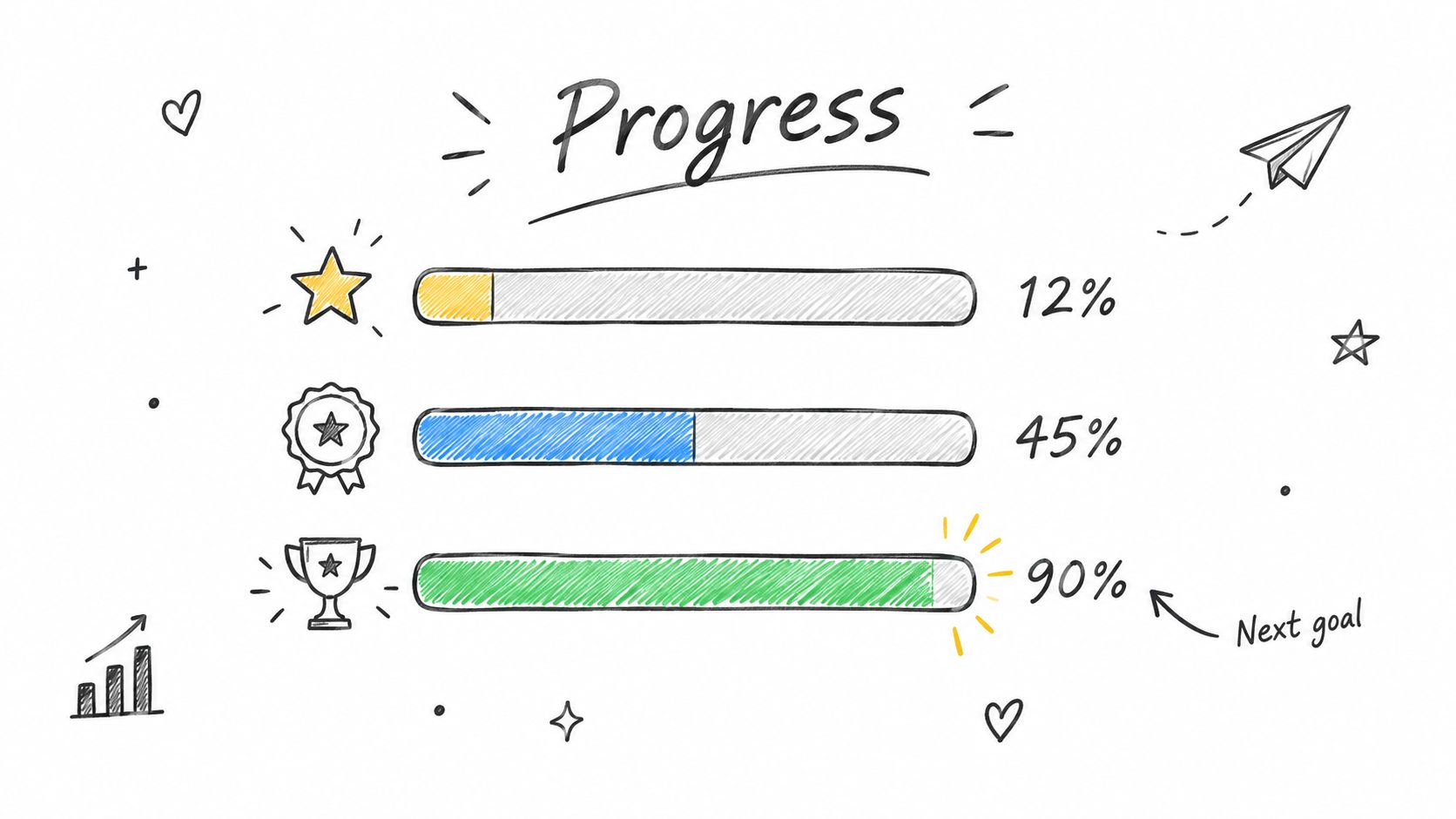
This works because games train people to care about visible progress. One win from Diamond. One boss left in a no-hit run. Last challenge before the camo completion. Fortnite battle pass clips, Call of Duty weapon grinds, Diablo 4 level pushes, and Elden Ring rune-risk moments all fit the same pattern. The target is easy to read, so the clip does not need much setup.
Opening template
Use an opening that names the finish line and the cost of failure.
Opening: “If I clear this fight, the build is done.”
Alt: “One match decides the rank-up, and this lobby went bad fast.”
That format is practical because it travels well. In a live stream, say it out loud before the attempt starts. In a clip, put the progress state on screen first and trim everything before the pressure shows up. In a short, turn the milestone into the first line of text so the viewer gets the premise before the action spikes.
The trade-off is simple. This hook is easy to understand, but weak milestones produce weak retention. “Almost there” is vague. “Final game,” “last attempt,” and “one objective left” give the audience a reason to stay.
Best use case and delivery
Use this format in games with obvious bars, checklists, ranks, or challenge states. It is especially reliable for recurring series because viewers can drop into the middle and still understand the objective. That makes it useful for VOD clipping, live commentary, and vertical recuts from the same session.
Show the proof early. If the rank screen, XP bar, quest log, or challenge text explains the goal, lead with that visual instead of explaining it over menu footage.
- Show the finish line immediately: Put the nearly-complete state in the first beat.
- Name the reward clearly: Tell viewers what completion gets them.
- Cut the dead setup: Remove queue time, menu movement, and throat-clearing.
Fast test for short-form
Test this hook with two edits from the same moment. Version A opens with your voice setting up the goal. Version B opens with the progress state on screen, then cuts straight to the point where the run starts to wobble. For gaming shorts, I usually see the visual-first version hold attention better because the viewer can process the stakes before they decide to swipe.
A quick script test helps too. Try one clip with “one game from rank-up,” one with “last challenge for camo completion,” and one with “if this boss dies, the run is finished.” Then compare which phrasing gets more holds, not just more clicks. The best version is usually the one that makes the finish line feel closest and the risk feel immediate.
2. Social Proof & Competition
Some clips win because viewers want to see where you stand against other people. Rank, placement, lobby strength, and category saturation all create instant stakes.

This is the leaderboard hook. Apex Legends ranked pushes, League of Legends ladder climbs, Clash Royale trophy grinds, and Valorant placement matches all work because the audience understands status fast. Even on Twitch, category choice adds a competitive layer. Twitch analytics exposes Avg Viewers:Channels, plus Clips Created and Clip Views, which helps you judge both category crowding and whether your stream is producing reusable moments, according to Twitch channel analytics documentation.
Opening template
“Everyone in this lobby outranked me.”
“I was buried in this category, so this clip had to carry.”
“This was the match that decided whether I stayed in top queue or dropped.”
That kind of line works because it gives the viewer a comparison target.
What works and what doesn’t
Competition hooks work when the gap matters. If the audience can tell you’re punching up, defending a spot, or surviving a stacked lobby, they have a reason to watch the result. They don’t work when the ranking is too abstract or when you hide the actual position until late in the clip.
Rankings aren’t interesting by themselves. The threat to the ranking is.
Use the scoreboard, ranked badge, tournament bracket, or category context early. If you’re clipping a Twitch stream, don’t just ask “can we win this?” Show the placement, then let the action explain the pressure.
A practical use for streamers is pairing competitive hooks with channel growth content. A challenge clip titled around “can I hold this rank” often complements broader growth strategy better than generic highlight spam. If you’re tightening your stream funnel, this guide on getting more Twitch followers pairs well with competition-led clips.
Fast test for short-form
Test one version with status first, then one version with action first. If the status screen is visually boring, use text overlay instead. For example: “Top 500 lobby” over the first chaotic gunfight. The key is that the ranking should sharpen the moment, not delay it.
3. FOMO and Limited-Time Events
Urgency is one of the oldest game hooks because expiration forces action. If the reward, mode, or event goes away, the audience understands why this match matters now.

Fortnite event finales, Destiny 2 seasonal content, rotating Valorant bundles, and temporary League modes all create built-in stakes. The opening doesn’t need to manufacture drama because the clock already does it.
Opening template
Try something blunt:
- Time pressure: “This event ends tonight, and I still hadn’t cleared the final challenge.”
- Scarcity angle: “This skin’s leaving, so I had one shot to make the clip worth it.”
- Mode urgency: “This mode was almost gone, and then this happened.”
The trade-off is that FOMO hooks expire fast. They can spike attention while the topic is hot, but they age badly if the clip relies only on timeliness.
Delivery rules that keep urgency credible
Use real countdown context from the game or event page. Show the event tab, challenge text, shop timer, or season screen. Then cut into the highest-tension moment, not your explanation of why the event matters.
Avoid fake urgency. Viewers can tell when you’re overselling a routine queue as a once-in-a-lifetime event. Save this hook for moments where expiration is visible and relevant.
Fast test for short-form
For short-form, urgency needs to appear in both text and footage. Start with on-screen wording like “last day of the event,” but make sure the next beat delivers a problem, reveal, or payoff. If the clip takes too long to prove why the limited-time angle matters, the urgency feels decorative.
This format is strongest for update reactions, event challenge clears, shop rotations, and “before it disappears” style content.
4. Narrative & Storytelling
Some of the best video game hooks aren’t about mechanics at all. They’re about unfinished stories.
Narrative hooks work because they create an open loop. Viewers stay to learn what happened, why it mattered, or what the reveal changes. That’s why lore reactions, boss reveals, seasonal story beats, and roleplay moments often outperform technically better gameplay.
Opening template
Use a line that points at change:
“I thought this quest was filler until that line changed everything.”
Or keep it even tighter:
“This looked like a normal cutscene. It wasn’t.”
Games like Destiny 2, Fortnite seasonal events, Elden Ring questlines, and Valorant lore drops all support this well because audiences expect reveals, not just action.
What works in story-driven clips
Narrative openings need contrast. Start with the surprising consequence, then backfill just enough context. If the clip begins with two minutes of lore explanation, you’ve killed the mystery. If it begins with the reveal and a quick line that frames why it matters, the audience has a reason to stay.
A lot of gaming marketing gets this right by packaging a world, a conflict, and a promise across title, frame, and opening together. If you want examples of how campaign framing sets up anticipation before the action even starts, browse these top marketing campaigns in gaming.
Fast test for short-form
Narrative shorts should start at the twist, not the setup. For example, if a boss reveal made chat explode, open on the facecam reaction and the reveal frame together. Then use captions to restore context in one short line.
- Start at the turn: Not the travel to the turn.
- Use reaction as proof: Story clips gain credibility when viewers see your response.
- Trim lore aggressively: Save the full explanation for long-form or the comments.
This hook is weaker for audiences who don’t know the game. To compensate, phrase the opening around the universal emotion. Betrayal, surprise, loss, payoff.
5. Daily and Weekly Engagement Loops
Habit hooks are less dramatic, but they’re reliable. They work when your audience likes returning to a format with a familiar rule.
Think daily challenge runs in Fortnite, weekly reset clears in MMOs, login reward streaks, or “one match every day until rank-up” formats. The appeal isn’t one giant moment. It’s consistency plus variation.
Opening template
“This was day seven, and missing it would break the streak.”
“Weekly reset gave me one objective, and it got ugly fast.”
“I only log in for this one challenge. Today it fought back.”
These lines work because they mix ritual with uncertainty.
Why this format builds series better than one-off clips
A streak or reset gives your audience a recurring frame. They know what the episode is, and they know what kind of payoff to expect. That makes habit hooks strong for creators who want a dependable content loop instead of isolated viral swings.
The downside is sameness. If every episode opens with the same line and the same challenge screen, viewers stop feeling tension. You need one fresh wrinkle each time. Higher stakes, weird constraints, a rule change, a harder lobby, worse RNG.
A streak only matters on camera if the audience can feel what breaking it would cost.
Fast test for short-form
Use a recurring visual package. Same series label, same intro text position, same challenge framing. Then change the conflict in the first second after that. For example, “Day 12 of one ranked win a day” followed immediately by your team trolling, a disconnect, or a brutal opponent.
Habit hooks are ideal for creators who post frequently and want recognizable episodic formatting.
6. Cosmetics & Identity
A lot of people don’t watch gaming clips for pure performance. They watch because the creator has a recognizable style, avatar, loadout, skin taste, or on-screen persona.
That makes cosmetics and identity a strong hook when the visual itself is part of the payoff. Fortnite skins, Valorant bundles, League champion cosmetics, Destiny ornaments, and VTuber presentation all fit here.
Opening template
“This skin made the whole clip funnier.”
“I bought the dumbest cosmetic in the game and instantly regretted it.”
“This loadout looked clean. Then I had to prove I deserved it.”
The best identity hooks connect appearance to action. A cosmetic alone is just a screenshot. A cosmetic under pressure becomes content.
Where streamers often miss this
Many creators show the skin, then talk too long before something happens. Better approach: show the cosmetic in motion while the conflict starts. If you’ve got a flashy melee, finisher, emote, or overlay persona, pair it with a moment that tests or subverts the identity.
For VTubers and personality-led channels, emotes can reinforce the same identity layer across clips and live chat. If you’re building that package, these free Twitch emote ideas can help tighten how viewers recognize your brand.
Fast test for short-form
Test whether the clip performs better when the identity signal appears before your voice. That could mean a distinctive avatar expression, a skin reveal, an emote overlay, or a branded subtitle style. If viewers instantly know whose clip it is and what vibe they’re getting, you’ve already reduced friction.
This hook is strongest for personality-led channels, fashion-showcase content, challenge loadouts, and ironic skin-to-skill contrasts.
7. Skill Expression & Mastery Progression
Mastery hooks attract viewers who want competence, not just chaos. They work when the audience can tell you’re attempting something difficult and has enough information to appreciate the execution.
This is the ranked-systems logic turned into content. Counter-Strike utility lineups, fighting-game punishes, Apex movement tech, speedrun segments, and high-level aim duels all fit because they show learned skill.
Opening template
“This only works if every input is clean.”
“I’d been failing this tech all week, then it finally clicked in ranked.”
“One mistake and the whole setup dies.”
That phrasing tells the viewer what to watch for. Precision.
Why mastery hooks often fail in mainstream feeds
They fail when creators assume the audience already understands the difficulty. A perfect combo is impressive to experts and invisible to everyone else unless you frame it. You don’t need a lecture. You need a simple label.
Independent analysis covered by Digiday found that for the most popular games on YouTube, short-form gaming videos under two minutes can outperform longer edits dramatically in some genres. In horror, average viewership for short-form reached about 700,000 versus roughly 300,000 for long-form horror videos, based on Gamesight reporting in Digiday’s coverage of short-form gaming engagement. The lesson for mastery clips is that pacing and payoff have to match genre expectation. A horror clip can hook with immediate dread. A high-skill clip needs immediate proof of difficulty.
Fast test for short-form
Add one fast framing line or caption before the execution starts. “Pixel angle.” “One-frame punish.” “No-heal boss clear.” Then let the clip breathe.
- Label the skill: Give the move a name or rule.
- Show the fail state: Viewers care more when they know what would ruin it.
- Keep the payoff intact: Don’t cut away right before the key mechanic lands.
Mastery hooks tend to build a more niche but loyal audience. They won’t always be your broadest clips. They’re often your strongest trust-builders.
8. Personalization & AI-Driven Recommendations
The best hook isn’t always the loudest one. Sometimes it’s the one that best matches the viewer, the platform, and the format.
That’s what makes personalization useful. Not in the abstract “algorithm” sense. In the practical sense of choosing an opening that fits the actual moment and destination. A Twitch highlight can open differently from a TikTok edit. A lore clip needs a different first line than a rage clip. An eight-hour VOD contains all of these, but only some moments survive the jump to vertical.
Opening template
“This clip only makes sense if you start here.”
“Chat thought the funny part was later. They were wrong.”
“This was the exact second the stream turned.”
Those openings signal curation. You’re not just posting a moment. You’re selecting the right entry point.
Packaging matters as much as the line
Current hook guidance is fragmented. One source in the research set argues that the first 1.5 to 3 seconds should include both a visible anomaly and a specific promise, while another points toward title, frame, and opening acting as separate parts of one story. That’s why strong video game hooks work better as a packaging system than a sentence.
If you’re clipping from long streams, the upstream decision matters most. Which moment deserves the hook? Recent creator workflow guidance points toward AI-assisted selection using gameplay, reactions, chat, and audio cues, then tightening the moment by removing silence and dead air. StreamGen fits that workflow directly, and this overview of an AI video clipper for stream highlights is relevant if you’re trying to reduce the time between live moment and postable short.
Fast test for short-form
Take one stream moment and package it three ways:
- Audience-first: Explain why the viewer should care.
- Moment-first: Start at the loudest or weirdest frame.
- Platform-first: Optimize text, framing, and pacing for Shorts or Reels.
Then compare which version gets the cleaner hold. If retention looks fine but the clip doesn’t get traction, the problem might be packaging or topic choice rather than the hook itself. That’s a useful distinction, and it saves a lot of bad editing decisions.
8-Point Comparison of Video Game Engagement Hooks
| Hook | Complexity (🔄) | Resources (⚡) | Expected Outcomes (📊) | Ideal Use Cases (💡) | Key Advantages (⭐) |
|---|---|---|---|---|---|
| Progress Bars & Achievement Unlocks | 🔄 Low–Moderate, UI + balancing | ⚡ Low, metric tracking + UI | 📊 Increases session frequency & completion rates | 💡 Incremental workflows, onboarding, clip pipelines | ⭐ Frequent feedback; clear goals; broad retention |
| Social Proof & Competition (Leaderboards) | 🔄 Moderate–High, real-time ranking + fairness | ⚡ Medium–High, realtime infra & anti-fraud | 📊 Drives sustained engagement, visibility, and virality | 💡 Competitive communities, creator leaderboards, weekly showcases | ⭐ Encourages status, social sharing, aspirational goals |
| FOMO & Limited-Time Events | 🔄 Moderate, event scheduling & gating | ⚡ Medium, asset creation & marketing cadence | 📊 Produces rapid engagement and revenue spikes | 💡 Seasonal campaigns, trend-driven creator challenges | ⭐ Urgency-driven participation and concentrated hype |
| Narrative & Storytelling (Seasonal Story Arcs) | 🔄 High, narrative design & episodic integration | ⚡ High, writers, cinematics, cross-team effort | 📊 Deep emotional investment and long-term retention | 💡 Lore-led seasons, creator spotlights, community discussion | ⭐ Builds emotional attachment and shareable moments |
| Daily/Weekly Engagement Loops (Login & Streaks) | 🔄 Low, calendars, streak counters | ⚡ Low, reward system + notifications | 📊 Reliable DAU uplift and habit formation | 💡 Daily creators, retention-focused features, onboarding habits | ⭐ Predictable daily returns; easy to implement |
| Cosmetics & Identity (Customization & Self-Expression) | 🔄 Moderate, asset pipeline + storefront | ⚡ Medium, artists, monetization systems | 📊 High monetization potential and social sharing | 💡 Profile customization, cosmetic stores, streamer branding | ⭐ High-margin revenue; fosters identity and attachment |
| Skill Expression & Mastery Progression (Ranked Systems) | 🔄 High, matchmaking, rating, anti-cheat | ⚡ High, infrastructure, monitoring, ops | 📊 Deep engagement among competitive users | 💡 Ranked play, rank-climb streams, competitive seasons | ⭐ Drives mastery, fair match quality, aspirational goals |
| Personalization & AI-Driven Recommendations (Flow State Tuning) | 🔄 High, ML models, data pipelines, privacy | ⚡ High, data, engineering, compute, compliance | 📊 Improved retention and conversion via relevance | 💡 Recommendation-driven discovery, creator guidance, onboarding | ⭐ Keeps users in flow; reduces friction; targeted monetization |
Build a Hook Library You Can Actually Use
These eight hook types do different jobs. Progress and streaks are strong for recurring series because they give viewers a familiar structure and a moving target. Competition and mastery work best for challenge-driven clips, especially when the audience needs a reason to care about rank, execution, or difficulty. FOMO is for timely updates, event clears, and anything with a real expiration date. Narrative works for reveals, reactions, and story turns. Cosmetics help personality-led channels and identity-driven clips. Personalization helps you choose the right opening for the right platform instead of forcing every clip into the same intro formula.
The simplest test is still the best one. Pick one hook style. Write a one-sentence opening that names the game moment and the viewer payoff. Put that sentence before the context, not after it. Then compare it against your normal intro.
That matters because early attention loss is steep. A 2025 Roblox traffic analysis reported that 50% of traffic disappears within the first two minutes, and the same source notes 2026 industry commentary saying the median mobile game keeps only 1% of players by Day 30, while even top-tier games often retain fewer than 4% after a month, according to Spaceport’s analysis of first-session retention and hooks. You don’t need to make your clips feel like mobile games. You do need to respect the same truth. Most drop-off happens early.
In practice, that means your hook has to match the payoff. If the clip promises a rank-up, the clip needs a real rank-up fight. If it promises a plot reveal, the reveal has to land quickly. If it promises a cosmetic flex, the visual has to matter to the moment. A mismatched hook can raise curiosity for a second and still hurt trust over time.
For StreamGen users, the production side gets easier when the workflow supports the hook instead of fighting it. AI Clip Finder can surface high-energy moments from long VODs. The Clip Editor can reframe vertically, add animated captions, and tighten pacing. Auto Posting can queue clips for TikTok, YouTube Shorts, and Instagram Reels so the distribution side stays consistent. But none of that replaces judgment. The opening still has to fit the actual moment the viewer is about to watch.
Build a small hook library for your channel. Keep a few lines for rank pressure, a few for challenge progress, a few for event urgency, and a few for story reveals. Reuse the formats. Change the specifics. That’s how video game hooks become repeatable instead of random.
StreamGen helps turn long Twitch streams into short-form clips without forcing you to scrub through hours of VODs by hand. You can use it to find stronger moments faster, tighten the opening in a vertical editor, and schedule posts across Shorts, Reels, and TikTok from one workflow. If you want to build a repeatable hook system instead of guessing every upload, visit StreamGen.
More blog posts