You’re writing a caption for a clip, or replying to someone’s comment, and the last thing you want is for “I’m serious” to read like sarcasm. You type “no cap,” glance at the emoji keyboard, and pause at 🧢. Should it stand alone, or should you pair it with 🚫?
The safest default is 🚫🧢 when you want the emoji itself to say “no cap.” A useful backup is 🙅🏽🧢. Add the words “no cap” or “for real” when the sincerity matters more than keeping the caption short. The examples ahead show how the phrase works, where the emoji can change its meaning, and what to watch for when you post across TikTok, Reels, Shorts, and Twitter.
Table of Contents
- Why You Need the Right No Cap Emoji Right Now
- What No Cap Actually Means and Where It Comes From
- The Billed Cap Emoji and Its Tech Details That Matter
- Best Emoji Combos to Express No Cap
- Real Caption and Comment Examples That Actually Land
- Platform-Specific Tips for TikTok, Reels, Shorts, and Twitter
- Quick Do’s and Don’ts Before You Hit Post
Why You Need the Right No Cap Emoji Right Now
A short-form video caption has little room for confusion. Say a gaming clip ends with an unlikely clutch, and you want to tell viewers it really was that impressive. “That was wild, no cap 🚫🧢” reads as a sincere reaction. A bare 🧢 after the same sentence can look like you’re calling the claim fake instead.
That difference comes from how people use the phrase and the cap emoji in conversation. “No cap” backs up a statement, while 🧢 on its own can suggest “that’s cap,” or “that’s a lie.” Readers move quickly through captions and replies, so a small change in the emoji pairing can shift your meaning before anyone reads the full thread.
For a simple choice, use the words “no cap” with 🧢 if you want the meaning to be explicit. If the surrounding text already makes your point, 🚫🧢 is a compact visual shorthand. 🙅🏽🧢 can also communicate “no cap,” though its gesture may feel more emphatic. Either can work as a default; choose the pair that fits your usual voice and use it consistently.
Quick decision: If 🧢 appears by itself, readers may interpret it as an accusation. Pair it with 🚫 or a clear “no cap” phrase when you mean “I’m telling the truth.”
The rest comes down to context. The same emoji can be literal headwear in a sports or clothing post, and slang in a conversation about whether a story is believable. Once you know which meaning you intend, you can choose a combination that fits the caption rather than relying on the emoji to do all the work.
What No Cap Actually Means and Where It Comes From
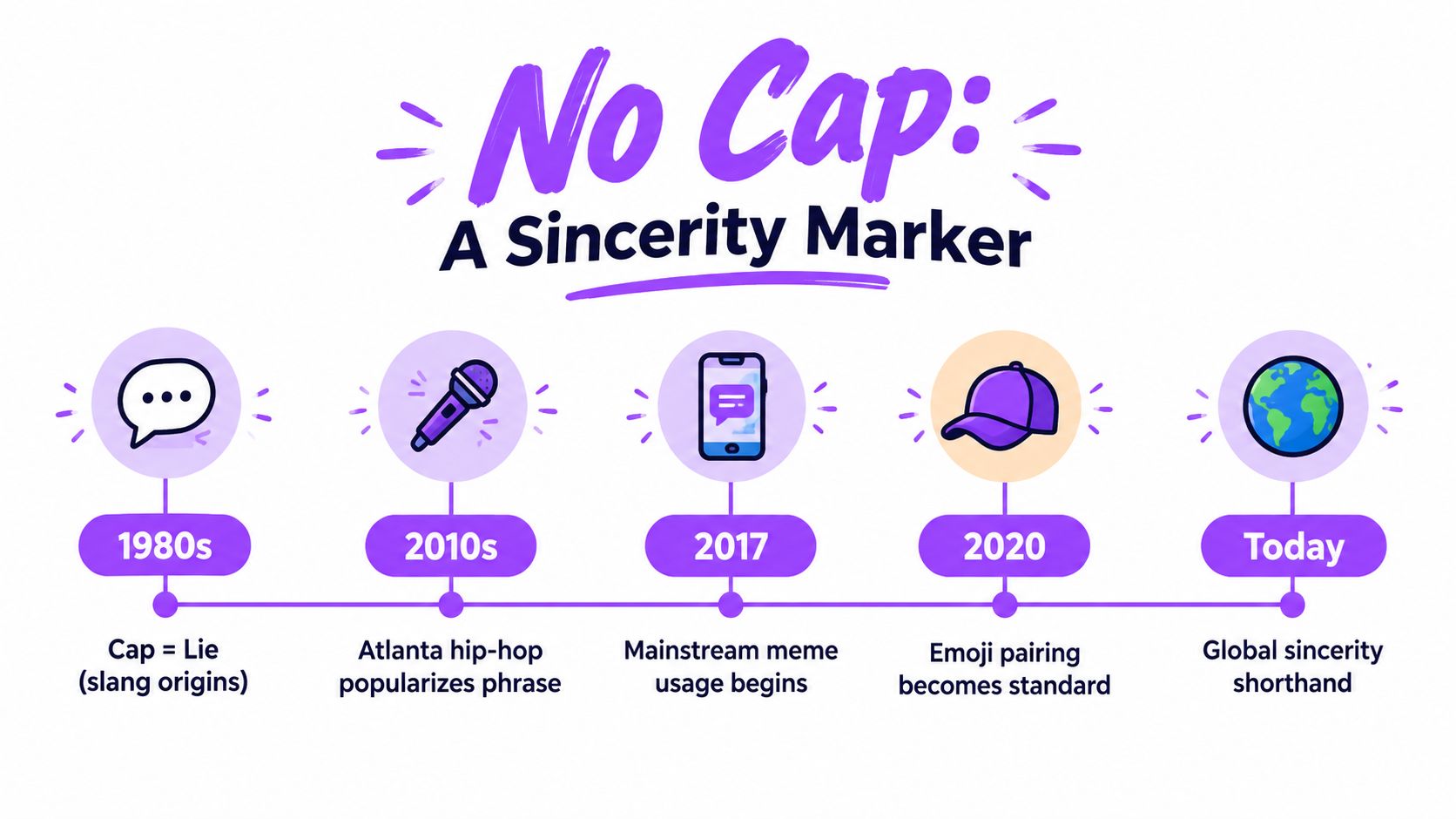
“No cap” means “no lie,” “for real,” or “I’m not exaggerating.” It works as a sincerity marker: a speaker adds it to say they mean what they’ve just said. “That was the best set of the night, no cap” signals a genuine opinion, not a claim that someone else is lying.
The phrase comes from African American slang, where cap can mean a lie, boast, or exaggeration. If you’re unfamiliar with that use, this guide to what cap means can help clarify why “cap” carries more than its literal meaning of a hat.
The phrase has a history beyond the emoji keyboard. Dictionary.com records “no cap” on Twitter by at least 2012, while noting that it likely existed in spoken English earlier. Atlanta-area hip-hop helped bring the expression to wider attention: Young Thug and Future released a track titled “No Cap” in 2017. That path, from spoken slang and music into online conversation, helps explain why the phrase can feel familiar even when someone uses it with a different emoji style. The history and meaning of other online expressions can also be useful context, as in this guide to O7 meaning.
Truth claim or accusation
Compare these two examples:
- “No cap, that was a perfect landing.” The speaker is insisting the praise is sincere.
- “That landing was perfect? 🧢” The emoji can suggest the speaker doubts the claim.
So “no cap” and 🧢 alone aren’t interchangeable. The words negate the idea of a lie. The standalone emoji can point toward the lie itself, especially alongside “that’s cap” or a skeptical response. The surrounding sentence, not the cap shape alone, tells readers which meaning you intend.
That distinction also makes cultural context important. Using the phrase thoughtfully means understanding it as slang with roots in African American speech, not just treating it as a random trend. Pairing it with the right words helps you keep the intended tone clear.
The Billed Cap Emoji and Its Tech Details That Matter
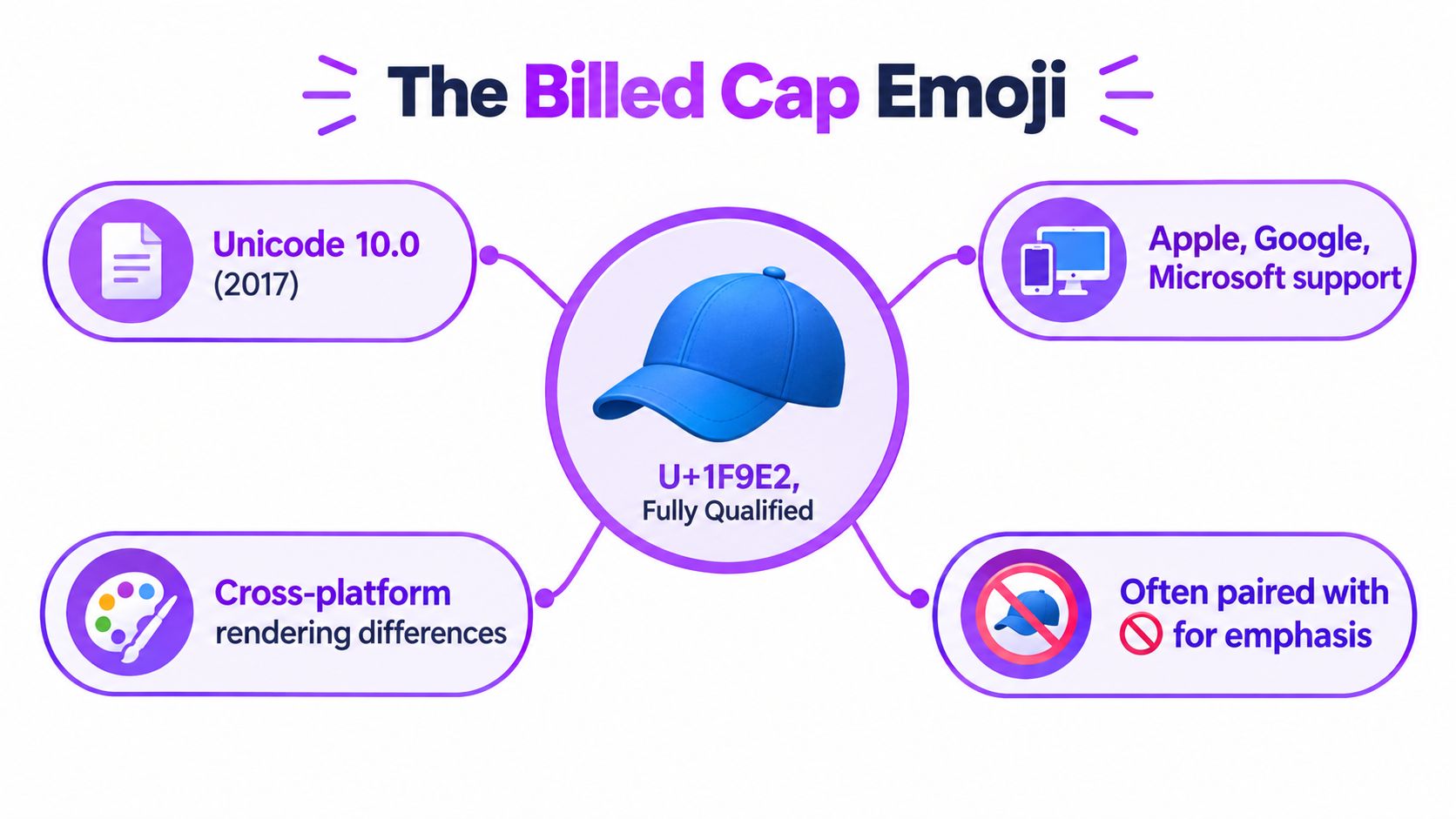
The 🧢 character is officially named “billed cap.” Its Unicode code point is U+1F9E2, and Unicode classifies it as an “Other Symbol.” It has East Asian Width “Wide” and is a fully qualified emoji, so compliant renderers generally display it in color rather than as a plain monochrome text symbol. Those details matter most when captions move between apps, devices, and editing tools.
For someone posting a caption, this means the emoji may not look identical everywhere. Its visual width can also differ from an ordinary ASCII character, so a line of text that fits in one layout may wrap differently in another. Preview your post before publishing if the emoji sits near a line break or at the end of a tightly spaced caption.
Keep the symbol, interpret the context
For caption systems, 🧢 is encoded in UTF-8 as a four-byte sequence, F0 9F A7 A2. A UTF-8-safe workflow should preserve that sequence rather than dropping or mangling the character during editing or export. Unicode’s entry for the billed cap emoji identifies its technical properties, including its code point and short name.
The meaning still depends on the words around it. In a baseball highlight or a clothing review, 🧢 may refer to literal headwear. In “no cap, that play was ridiculous,” it signals sincerity. And in “that’s cap,” it can mark a challenge to someone’s claim.
For caption tools: Preserve the original emoji, then interpret nearby language. Don’t label every 🧢 as a deception claim.
That’s a safer approach for both human readers and automated captioning. A system can retain the emoji while using surrounding cues, such as “no,” “for real,” or sports and clothing terms, to distinguish an assertion of truth from an accusation. Keeping the original token in the caption or metadata avoids forcing one meaning onto every use.
Best Emoji Combos to Express No Cap
If you want the emoji pairing to carry the meaning without much extra text, start with 🚫🧢. It visually communicates “no cap” and is a clear default for a caption or reply. 🙅🏽🧢 is a reasonable alternative when you want a more expressive gesture, though the person and pose in the emoji can give it a more playful feel.
Other options work best when the words do more of the explaining. 🧢 after “no cap” adds emphasis, while 💯🧢 can suit an enthusiastic reaction. But a standalone cap can also read as an accusation. For related online slang and gaming-chat usage, this guide to what a pogger means offers another example of how context shapes informal expressions.
| Emoji combo | What it signals | Best used when | Example sentence |
|---|---|---|---|
| 🚫🧢 | “No cap,” or a sincere claim | You want a clear emoji-only shorthand | “That comeback was unreal 🚫🧢” |
| 🙅🏽🧢 | “No lie,” with an emphatic gesture | Your tone is casual and expressive | “🙅🏽🧢 I’m serious, that was the best match.” |
| 🧢 with “no cap” | A sincerity marker reinforced by text | You want the wording to stay unmistakable | “No cap 🧢, I’d watch that again.” |
| 💯🧢 | Emphatic agreement or approval | You’re reacting positively and the sentence supplies context | “That’s the cleanest edit 💯🧢” |
| 🧢 alone | Potentially “cap,” meaning a false or exaggerated claim | You’re challenging someone, or the context makes that clear | “You got that score without practice? 🧢” |
The right choice depends on what your sentence already says. For a sincere claim, 🚫🧢 is the strongest general-purpose pick. If your words say “no cap” already, 🧢 can reinforce them. If you’re calling something unbelievable, use 🧢 only when the accusation is intended and obvious from the surrounding text.
Skip a pairing if it makes your tone harder to read. An emoji can add emphasis, but it can’t always fix a sentence that sounds sarcastic or unclear. When sincerity matters, write the phrase and let the emoji reinforce it.
Real Caption and Comment Examples That Actually Land
A good pairing feels natural in a sentence, not pasted on as decoration. These examples show how the same slang can fit a gaming highlight, a reply, or a more personal caption without changing the reader’s takeaway.
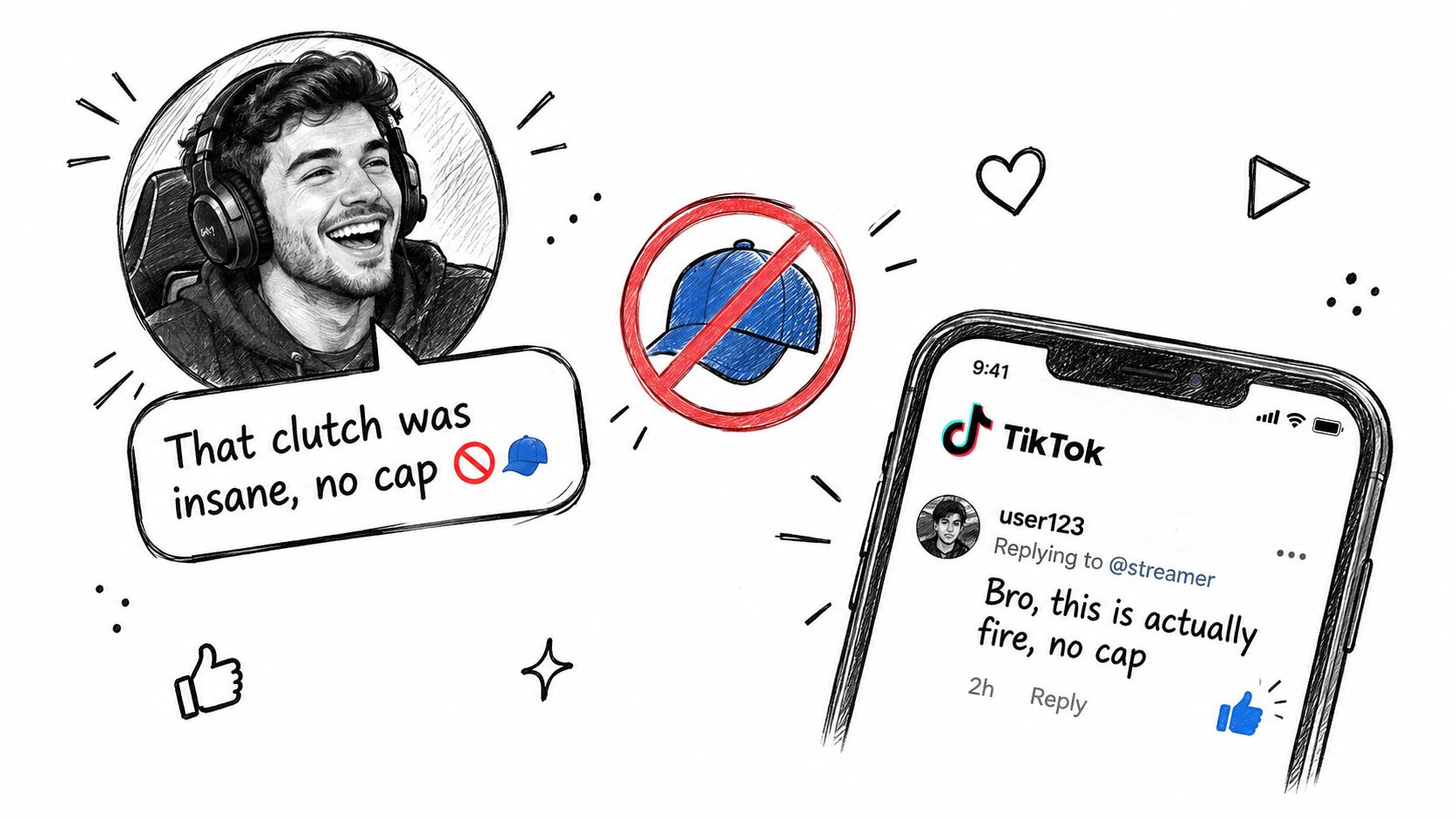
- Twitch highlight: “That clutch was insane, no cap 🚫🧢.” The words and pair point in the same direction: the creator genuinely thinks the play was remarkable. Replacing the pair with 🧢 alone could make the praise look doubtful.
- TikTok reply: “Bro really said that 💯🧢.” This reads as a lively reaction, but the sentence and thread matter. If you mean that the person is lying, “That’s cap 🧢” makes the accusation clearer.
- Instagram Reels caption: “First stream in three years and it felt like home, no cap.” Here the phrase carries the sincerity, so an extra emoji isn’t necessary. A plain 🧢 at the end might make the sentiment feel more ironic than intended.
- YouTube Shorts comment: “This edit is wild 🧢.” Without more context, readers might read 🧢 as skepticism rather than praise. “This edit is wild, no cap 🚫🧢” makes the intent easier to follow.
For more caption ideas to adapt to your own voice, browse these copy-paste captions for your posts. Treat them as starting points, not scripts. A phrase lands best when it sounds like something you’d say in the comments, and the emoji supports the point instead of competing with it.
The pairings work well in short-form replies because they compress a longer claim into a few characters. But the words still matter: “no cap” affirms a statement, while “that’s cap” challenges one. The same distinction between sincerity and playful exaggeration comes up across gaming slang, including the expression explained in this guide to what 5 Head means.
Here’s a short visual example of how slang and emoji work together in conversation:
Platform-Specific Tips for TikTok, Reels, Shorts, and Twitter
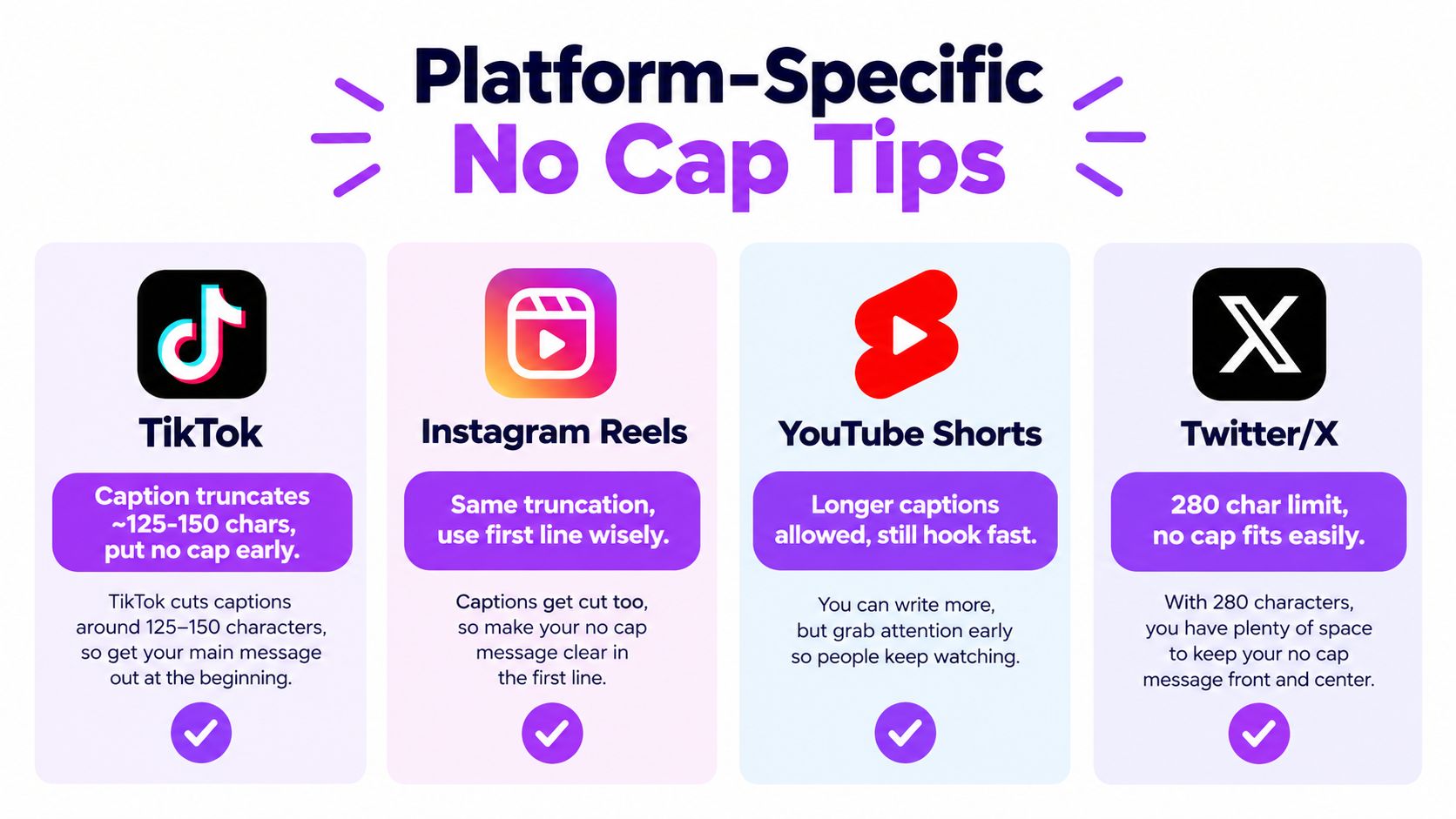
A caption can be clear in your editor and feel different once it appears in a feed. Keep the words that establish your meaning near the start, preview the finished post, and don’t rely on a subtle emoji rendering to carry the whole message.
Make the meaning visible early
On TikTok and Instagram Reels, put “no cap” or the main point near the beginning of the caption, so readers can understand the post without relying on the emoji at the end. On YouTube Shorts, lead with the most useful part of the description rather than burying the point after extra setup. For Twitter, keep the sentence direct and check the total length after adding emojis, which can occupy more visual space than ordinary letters.
The 🧢 emoji may render differently across iOS, Android, and desktop. A change in color or shape usually doesn’t erase the meaning, but it can alter how a combination looks at a glance. Previewing the post helps you catch a pairing that feels too crowded or ambiguous on the device you’re using.
For accessibility, don’t assume screen readers will interpret 🧢 as slang. Unicode’s short name is “billed cap,” so a reader may hear the literal object name. Putting “no cap” in the text near the emoji gives people a clearer signal than using a symbol alone.
If you’re comparing ways to plan posts for different networks, Scheduler.social’s TikTok platform overview can help you consider how your publishing workflow fits the platform. Whichever scheduling method you use, check that your caption retains the emoji and the surrounding words. A workflow that strips or alters a character can remove the cue your readers need to understand the tone.
Quick Do’s and Don’ts Before You Hit Post
Use this checklist before publishing:
- Do pair 🧢 with clear wording. “No cap” or “for real” makes sincerity easier to recognize.
- Do choose a default. Use 🚫🧢 or 🙅🏽🧢 when you want the pair to carry the meaning.
- Do keep literal context in mind. In a baseball or apparel post, 🧢 may just mean a hat.
- Don’t leave a standalone 🧢 unexplained unless you mean “cap” as a challenge or the conversation makes that meaning obvious.
- Don’t stack unrelated emojis if they make your tone harder to read.
- Do check automated captions. Keep the emoji intact, and make sure the words around it preserve the intended meaning.
Choose one default pair, use it where it fits, and your no cap voice will feel natural rather than forced.
StreamGen turns Twitch streams into short-form clips, with tools for editing captions and scheduling posts to TikTok, YouTube Shorts, and Instagram Reels. If you’re ready to keep your clip text and emoji pairings intact from edit to post, visit StreamGen and explore its clipping and publishing workflow.
More blog posts